
The construction industry is becoming more complex every year. Multiple projects, rising material costs, labour management challenges, delayed approvals, and tight profit margins make project execution increasingly difficult.
Many construction companies still rely on spreadsheets, phone calls, paper-based approvals, and disconnected software systems. While these methods may work for smaller operations, they often create delays, cost overruns, material shortages, and a lack of visibility as projects grow.
This is where Construction ERP Software becomes essential.
What is Construction ERP Software?
Construction ERP Software is an integrated business management system designed specifically for construction companies, builders, contractors, and infrastructure firms.
It connects key business functions such as:
- BOQ & Estimation
- Tendering
- Procurement
- Inventory Management
- Site Execution
- Labour Management
- Billing
- Finance & Accounting
- Reports & Analytics
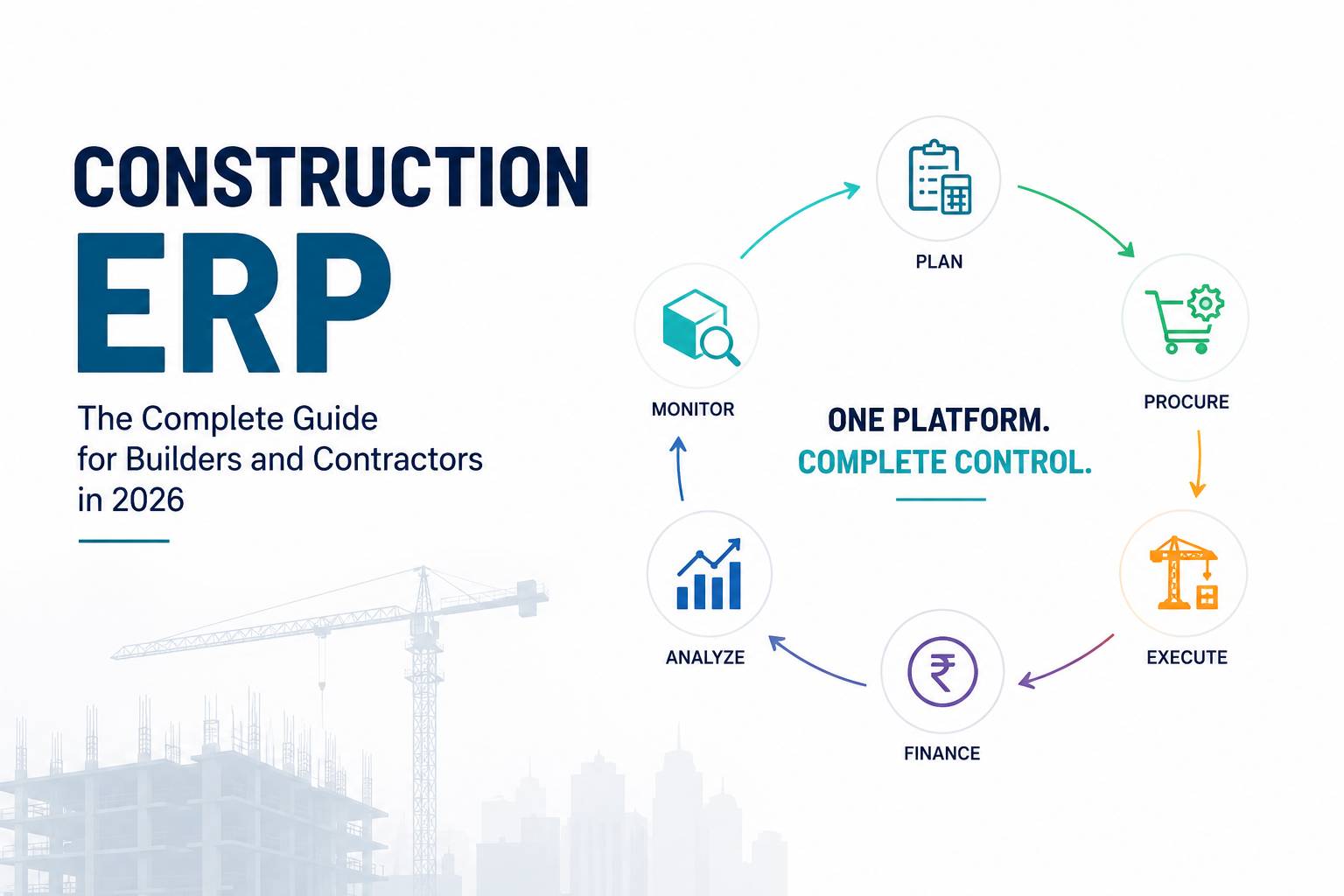
Instead of managing separate systems for each department, a Construction ERP provides a single platform for complete project control.
Why Construction Companies Need ERP Software
Construction projects involve multiple stakeholders, locations, vendors, subcontractors, and resources. Without centralized management, businesses often face:
- Project delays
- Material shortages
- Budget overruns
- Manual reporting
- Duplicate data entry
- Delayed billing cycles
- Poor cash flow visibility
- Limited decision-making insights
A Construction ERP system helps eliminate these challenges by providing real-time information across every stage of the project lifecycle.
Key Benefits of Construction ERP Software
1. Better Project Planning and Execution
ERP software enables project teams to plan resources, monitor progress, track milestones, and identify delays before they impact project delivery.
With real-time visibility into ongoing activities, project managers can make faster and more informed decisions.
2. Improved Cost Control
Construction businesses often struggle with cost overruns caused by material wastage, procurement delays, and inaccurate budgeting.
A Construction ERP tracks:
- Project budgets
- Actual expenditures
- Cost variances
- Cash flow
This allows management teams to control costs proactively and improve profitability.
3. Real-Time Material Management
Material costs represent a significant portion of project expenses.
An ERP system provides:
- Stock visibility
- Material issue tracking
- Purchase management
- Consumption monitoring
- Inventory optimization
This helps reduce wastage and prevents project delays caused by stock shortages.
4. Efficient Procurement Management
Construction ERP software streamlines procurement activities through:
- Purchase Requisitions
- Purchase Orders
- Vendor Management
- Approval Workflows
- Material Receipt Tracking
This creates greater transparency and accountability throughout the procurement process.
5. Mobile Site Management
Modern ERP systems allow site engineers and supervisors to update project information directly from mobile devices.
Teams can:
- Submit daily progress reports
- Record labour attendance
- Track material movement
- Capture site photographs
- Report quality and safety observations
This improves communication between the site and head office.
6. Faster Billing and Financial Control
Construction ERP software simplifies:
- Running Bills
- RA Bills
- Receivable Tracking
- Budget Monitoring
- Financial Reporting
The result is improved cash flow management and reduced billing delays.
Essential Features to Look for in Construction ERP Software
When evaluating ERP solutions, construction companies should look for:
- BOQ & Estimation Management
- Tender Management
- Procurement Automation
- Inventory Management
- Site Execution Monitoring
- Labour & Contractor Management
- Billing & Finance
- Analytics & Dashboards
- Mobile Application
- Role-Based Access Control
- Cloud and On-Premise Deployment Options
The right ERP should support both operational efficiency and long-term business growth.
Cloud vs On-Premise Construction ERP
Many construction companies ask whether they should choose Cloud ERP or On-Premise ERP.
Cloud ERP
Benefits include:
- Lower infrastructure costs
- Anywhere access
- Faster deployment
- Automatic updates
- Scalability
On-Premise ERP
Benefits include:
- Complete data control
- Internal server management
- Customized infrastructure policies
Some organizations also prefer Hybrid deployment models that combine the advantages of both approaches.
How Construction ERP Improves Profitability
A well-implemented ERP system improves profitability by:
- Reducing material wastage
- Improving resource utilization
- Accelerating billing cycles
- Preventing project delays
- Enhancing procurement efficiency
- Increasing workforce accountability
By providing accurate, real-time data, ERP software helps management make smarter business decisions and improve project margins.
Choosing the Right Construction ERP Partner
Technology alone is not enough.
A successful ERP implementation requires:
- Industry expertise
- Process understanding
- Customization capabilities
- Data migration support
- User training
- Ongoing maintenance and support
Construction companies should choose an ERP partner that understands industry-specific workflows and can adapt the system to their operational requirements.
Conclusion
Construction ERP Software is no longer a luxury for growing construction businesses. It has become an essential tool for managing projects, controlling costs, improving productivity, and increasing profitability.
Whether you are a builder, contractor, infrastructure company, or real estate developer, the right ERP system can help you streamline operations, improve visibility, and deliver projects more efficiently.
The future of construction management belongs to businesses that embrace digital transformation and make data-driven decisions.